Military PCS Car Shipping: 2026 Cost Guide for Shipping a Car on PCS Orders
If you have orders in hand and need military PCS car shipping, the car is usually the logistics problem nobody briefed you on. Household goods get a mover, you get a report date, and somewhere in between a sedan, a truck, and maybe a spouse's car have to get from one duty station to the next — on time, without you driving 2,000 miles you do not have.
This guide is built for that exact situation. It covers what military car shipping costs in 2026, what the government will and will not ship for you, how long popular PCS routes take, how to handle a second vehicle, and how to book without adding stress to an already full PCS checklist.
How Much Does Military PCS Car Shipping Cost in 2026?
Most service members who ship a car during a PCS on a CONUS move pay out of pocket, so the number matters. For a standard sedan on an open carrier, these are typical all-in market estimates at current 2026 rates:
- Short move, under 500 miles: roughly $500–$900
- Medium move, 500–1,000 miles: roughly $800–$1,200
- Long move, 1,000–1,800 miles: roughly $900–$1,500
- Cross-country move, 2,000+ miles: roughly $1,200–$1,900
Larger vehicles cost more on every route. As a rule of thumb, add roughly $100–$250 for a mid-size SUV over a sedan on the same lane, and $200–$350 or more for a full-size truck or large SUV. Enclosed transport, which most PCS families do not need for a daily driver, typically runs about 40–60% more than open transport.
Examples on common PCS lanes, for an open-carrier sedan:
- San Diego area → Central Texas (Fort Cavazos area, ~1,200 miles): roughly $900–$1,300
- Norfolk / Hampton Roads, VA → San Diego, CA (~2,700 miles): roughly $1,200–$1,700
- Fort Drum, NY → Joint Base Lewis-McChord, WA (~2,800 miles): roughly $1,400–$1,900
- Colorado Springs, CO → Fort Bragg / Fort Liberty area, NC (~1,700 miles): roughly $1,000–$1,500
- El Paso / Fort Bliss, TX → Fort Stewart, GA (~1,700 miles): roughly $1,000–$1,400
These are broad estimates, not quotes. Your actual price depends on your exact pickup and delivery addresses, the vehicle, the season, and how much flexibility you can give the carrier on dates. Summer is peak PCS season, and prices on base-to-base lanes reflect that — the same route can run noticeably higher in June and July than in February.
Does the Military Ship Your Car for Free? CONUS vs. OCONUS
This is the question behind almost every military auto transport search, and the honest answer is: it depends on where you are going, and your orders are the final word.
CONUS moves (inside the continental United States). In most cases, the government does not arrange or pay a commercial carrier to ship your privately owned vehicle (POV) from one CONUS duty station to another. Most service members either drive their car themselves — and are reimbursed mileage under the rules that apply to their orders — or arrange and pay for commercial shipping on their own. That is why most CONUS PCS vehicle shipping is a private booking, like the ones this guide is about.
OCONUS moves (outside the continental United States, including Hawaii, Alaska, and overseas). The rules are different. Eligible service members on qualifying OCONUS orders may be entitled to ship one POV at government expense through a Vehicle Processing Center (VPC), subject to the Joint Travel Regulations, the host-nation rules, and the specifics written into their orders. Weight, size, and vehicle-type restrictions can apply, and timelines through a VPC are measured in weeks, not days.
Two practical takeaways:
- 1. Read your orders and check with your transportation office / PPSO first. They can confirm whether a government POV shipment applies to your move at all. Do not assume a benefit — or assume you do not have one — based on what someone in your unit did on different orders.
- 2. A second car is almost always on you. Even when one POV ships at government expense on an OCONUS move, a second family vehicle, a motorcycle, or a project car is typically a private, out-of-pocket shipment. The section on second cars below covers how families usually handle that.
Freedom Transport Service is a private, nationwide auto transport brokerage. We are not a government contractor for VPC shipments, and we will tell you plainly if your move sounds like one you should run through your transportation office first.
Popular PCS Routes and How Long They Take
Carriers average about 500 miles per day once your vehicle is loaded. Pickup timing is separate — allow time for a carrier to be assigned and routed to you. Typical planning windows:
- Under 500 miles: 1–2 days in transit, plan 3–5 days door to door
- 500–1,000 miles: 2–3 days in transit, plan 4–7 days door to door
- 1,000–1,800 miles: 3–5 days in transit, plan about 1 week door to door
- Cross-country, 2,000+ miles: 5–8 days in transit, plan 7–10 days door to door
The busiest PCS corridors are the base-to-base lanes you would expect: California bases to Texas, the East Coast to the West Coast and back, Texas to the Southeast, and the Pacific Northwest to the Midwest and South. Those lanes are good news for pricing and scheduling — carriers run them constantly in PCS season, so well-timed bookings match quickly.
What slows a PCS shipment down is rarely the drive. It is usually a tight, single-day pickup demand, a pickup well away from a main corridor, or a vehicle that is not ready when the truck arrives. A 2–3 day pickup window is the single biggest favor you can do your own timeline.
Open vs. Enclosed Transport for a PCS Move
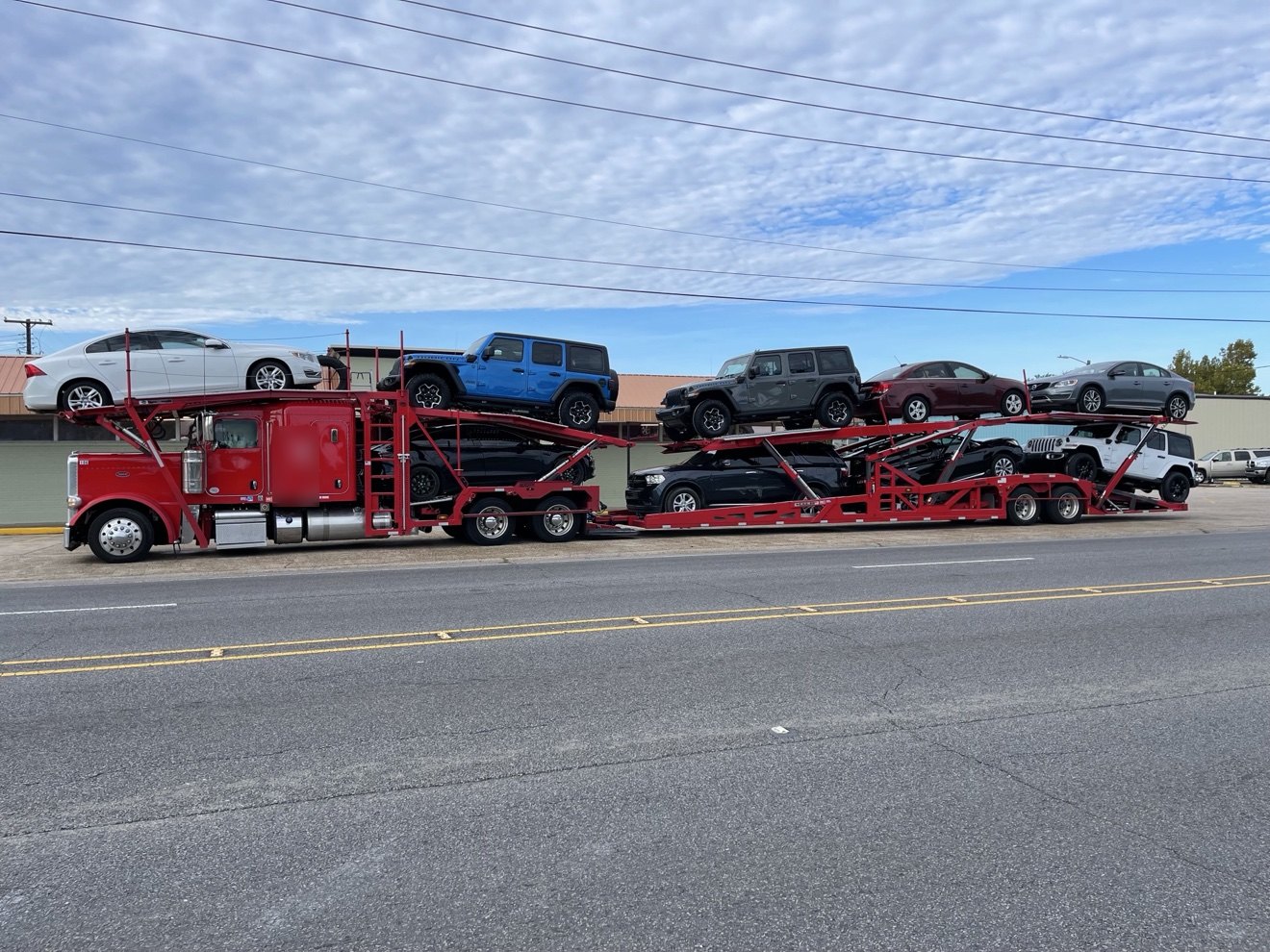
For the vast majority of PCS moves, open transport is the right choice. It is how most vehicles shipped in America travel, it is the most available option on base-to-base lanes, and it keeps the cost down on a move that is already full of out-of-pocket expenses. Your car will arrive with road dust on it. That is normal, and a wash fixes it.
Consider enclosed transport only when the vehicle itself justifies it:
- A classic, collector, or exotic car
- A fresh restoration or show vehicle where paint condition is the point
- A very high-value vehicle where the extra protection is worth the premium to you
Motorcycles are a special case on a PCS move: they ship enclosed-only for proper protection and securement. If a bike is going with you, ask about that up front rather than assuming it can ride on an open car carrier.
How PCS Vehicle Shipping Works, Step by Step
- 1. Get a free quote with your real dates. Use your exact pickup and delivery cities, your vehicle year, make, and model, and whether it runs and drives. Mention that this is a PCS move and give your report date — timing advice is different when there is a hard deadline.
- 2. Book with a pickup window, not a single hour. A 2–3 day window lets your broker match you with a vetted, insured carrier already running your corridor, which is both faster and usually cheaper than forcing one specific day.
- 3. Carrier assignment. The broker assigns a carrier, confirms the pickup window, and you get the driver's timing as it firms up. Nothing about a legitimate booking should require paying the full amount up front.
- 4. Prepare the vehicle. Wash it so the pickup inspection is accurate, remove personal items and household goods, leave about a quarter tank of fuel, and note anything that does not work — brakes, steering, leaks, a dead battery.
- 5. Pickup inspection. You (or a person you designate) walk the vehicle with the driver. Existing dings and scratches go on the Bill of Lading, you both sign, and you should take your own dated photos as well. If you will already be at your new duty station, arrange in advance who will hand over the car and keys.
- 6. Transit and updates. Your broker should be reachable by phone while the car is moving — six days a week in our case — and able to tell you where things stand without you chasing a call center.
- 7. Delivery inspection. Walk the car at delivery, compare it against the pickup Bill of Lading before you sign, note any concern on the paperwork first, and then settle the remaining balance the way your booking specifies.
Timing Your Shipment Around Your Report Date
Work backwards from the date you must have a car, not from the date you want to ship it.
- If you need a car the day you arrive: Ship it 7–10 days before you travel on a cross-country move, and have a designated person at the destination ready to receive it — a spouse who traveled ahead, a sponsor, or a trusted friend near base. Confirm base access and delivery logistics in advance; carriers deliver door to door whenever safely accessible, but gate access rules vary by installation.
- If you can be without a car for a few days: Ship it as you leave. Many families drive one car, ship the other, and use the driven car until the shipped one arrives. That is usually the cheapest, calmest arrangement.
- If your dates slip: Tell your broker as soon as orders or travel plans change. A shipment that has not been assigned to a carrier yet is far easier to move than one already dispatched. Silence is what turns a small date change into a problem.
- Avoid the peak-of-the-peak if you can. Late May through early August is the heaviest PCS demand of the year. If your orders give you any choice at all, shipping a week or two ahead of the main surge can mean better availability and pricing.
Shipping a Second Car, a Spouse's Car, or a Motorcycle
Two-car military households are the norm now, and a PCS move is where that gets expensive if you do not plan it. Options families use most:
- Drive one, ship one. The default for a reason. You keep a car for the trip and for your first days at the new station, and only one vehicle needs a carrier.
- Ship both, on the same booking. Shipping two vehicles together on the same lane and dates is usually more efficient than two separate, unrelated bookings. Ask for both vehicles to be quoted together from the start — do not book one and add the second later.
- Ship the motorcycle separately, enclosed. Bikes need enclosed transport and proper securement. If the bike matters to the move, include it in the first conversation so its timing is planned alongside the cars, not as an afterthought.
- Store or sell — honestly considered. For a short tour, a car you barely drive, or a vehicle near the end of its life, storage or selling before the move can beat shipping it twice in two years. A good broker will not talk you out of that math if it is right for you.
If one of your vehicles is headed somewhere different — left with family, sent to a school, or delivered to a buyer — that is a separate lane with its own price and timing. Get it quoted separately and early.
7 Ways to Keep Your PCS Car Shipping Cost Down
- 1. Ask about the military discount — and ask first. Freedom Transport Service offers a Military discount for active military and their families. It will not be itemized by a percentage here because your quote depends on your route and vehicle; ask when you get your quote so it is built in from the start, not negotiated after.
- 2. Give a flexible pickup window. Two to three days of flexibility is worth real money on almost every lane.
- 3. Book two to three weeks out when orders allow. PCS orders do not always allow it, but when they do, earlier booking means more carrier choice.
- 4. Meet near a main corridor or metro if you are rural. A pickup far off the carrier's route costs extra because the driver has to travel empty to reach you. Meeting closer in can reduce that.
- 5. Ship the daily driver open. Save enclosed pricing for the vehicle that truly needs it.
- 6. Do not pack the car with household goods. Carriers are not licensed to move household goods, cargo insurance for a vehicle does not cover belongings left inside it, and extra weight can create a problem at pickup. Ship your household goods through your normal PCS channels.
- 7. Compare all-in prices, in writing. A low headline number that grows later is not a saving. Compare the full price, the pickup window, and what is included — including insurance coverage through the carrier — before you choose.
PCS Car Shipping Prep Checklist
- Orders and report date confirmed; pickup window chosen by working backwards from when you need the car
- Designated person named for pickup and for delivery, with phone numbers shared with your broker
- Vehicle washed, photographed, and inspected by you before the driver arrives
- Personal items, valuables, and household goods removed
- Fuel at about a quarter tank; battery charged; tires holding air
- Non-running issues disclosed when you book — a vehicle that cannot roll, brake, or steer needs different equipment and must be priced that way
- One set of keys ready for the driver, plus your copy of the Bill of Lading kept after pickup
Choosing a Company for Military Auto Transport
On a PCS timeline, the company matters more than a small price difference. Look for:
- FMCSA registration you can verify. Every legitimate broker has an MC number. Ours is MC# 1432123.
- Experience with military timelines. Ask directly whether they handle PCS moves and tight report dates regularly.
- A military discount, offered plainly. Active military and families should not have to hunt for it.
- Real, USA-based humans on the phone. Freedom Transport Service is a 100% USA-based team, available 6 days a week. Call us at 800-507-2629.
- All-in written pricing. No vague asterisks, no full payment demanded up front, and no pressure tactics about a price expiring today.
Get a Free Quote for Your PCS Move
Tell us your two duty stations (or your exact cities), your vehicles, and your report date, and we will quote the move as it actually is — open and enclosed options where they make sense, the military discount applied, and a pickup plan built around your orders.
Get a free quote for your PCS move
Tell us your two duty stations, your vehicles, and your report date — we will quote the move as it actually is, with the military discount applied.
Freedom Transport Service is a nationwide auto transport brokerage (MC# 1432123) that ships vehicles for military families on PCS moves across the country, including second cars and enclosed-only motorcycles. Call 800-507-2629 to talk it through with a real person, 6 days a week.
Frequently Asked Questions
How much does it cost to ship a car for military PCS? On CONUS moves, most military families pay privately. Typical open-transport estimates in 2026 run roughly $500–$900 under 500 miles, $800–$1,200 for 500–1,000 miles, and $1,200–$1,900 cross-country for a standard sedan. SUVs and trucks cost more, and summer PCS season is the most expensive window. Ask for your military discount when you get a free quote for your exact route.
Does the military pay to ship your car during a PCS? For most CONUS moves, no — service members generally drive their POV or arrange commercial shipping at their own expense. For qualifying OCONUS moves, one POV may ship at government expense through a Vehicle Processing Center under your orders and the Joint Travel Regulations. Check your orders and your transportation office / PPSO to confirm what applies to your move.
How long does military PCS car shipping take? Plan about 3–5 days door to door for short moves, about a week for 1,000–1,800 miles, and 7–10 days cross-country. That includes carrier assignment time before pickup. Work backwards from your report date and give a 2–3 day pickup window.
Can I ship a second car on a PCS move? Yes — and it is common. Even when one POV qualifies for a government shipment on an OCONUS move, a second car is usually a private shipment. Many families drive one car and ship the other, or ship both vehicles together on one booking so they are quoted and scheduled as a pair.
Can I put household goods or personal items in my car during PCS shipping? No. Carriers are not licensed for household goods, extra weight can cause problems at pickup, and belongings inside a vehicle are not covered by the carrier's cargo insurance. Move household goods through your normal PCS household goods shipment and remove personal items from the car before pickup.
Do car shipping companies offer a military discount? Many do. Freedom Transport Service offers a Military discount for active military and their families — ask for it when you request your quote so it is included from the start. Call 800-507-2629 or request a free quote online.