
Texas → California · About 1,930 miles
Ship a Car from Houston to San Francisco
Houston to San Francisco links the energy capital to the Bay Area, and the traffic follows the jobs: engineers and tech employees changing cities, families relocating from Texas to Northern California, students, and dealers moving inventory between Gulf Coast and Bay Area lots. Online buyers ship Houston-area trucks and SUVs west, and households send a second car ahead of a move so the California driveway is set on arrival. Plenty of shipments also run the other life direction — people trading Bay Area costs for Texas in reverse lanes, keeping trucks busy both ways.
Carriers run Interstate 10 west out of Houston across Texas, New Mexico, and Arizona — San Antonio, El Paso, Tucson, Phoenix — into Southern California, then turn north on I-5 through the Central Valley into the Bay Area. Typical transit is 4–6 days door to door once your vehicle is loaded. Most cars move on open transport, the standard way vehicles travel this lane, with insurance coverage included. Classic, luxury, and exotic owners often choose enclosed transport for extra protection from desert sun, dust, and road debris on the long western legs.
Below you’ll find the typical price ranges for this route, how the process works, and the details that actually move the price. The ranges below are a guide — your exact price depends on your specific pickup and delivery cities, since a pickup well outside the Houston metro or a delivery well outside the San Francisco metro prices differently than metro to metro. The quote form gives you a price for your specific cities.
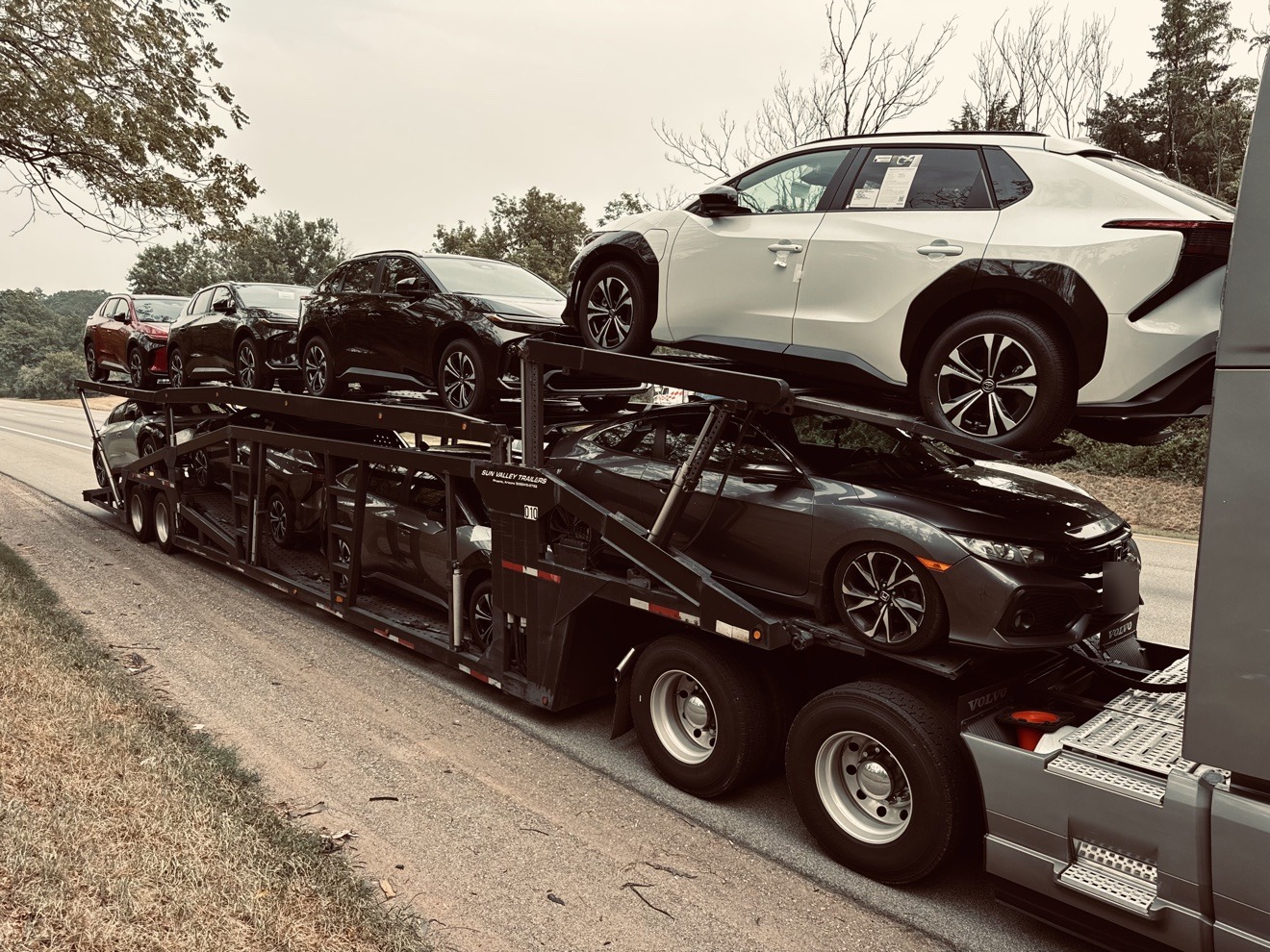
Houston to San Francisco car shipping cost
Typical ranges for a standard sedanOpen transport
typically $1,000–$1,500
Enclosed transport
typically $1,600–$2,200
Typical ranges for a standard sedan in running condition. Season is a factor too: prices run higher when demand peaks — snowbird season in the fall and spring, the summer moving season, and the year-end holidays — and lower in quieter months. Your exact price depends on your specific pickup and delivery cities — locations well outside the Houston or San Francisco metros can price differently than metro to metro. Use the quote form for your free quote.
Get a shipping quote
Enter your vehicle and dates to get your free quote for Houston to San Francisco — no obligation, and no payment due to get the number.
How it works
Three steps from quote to delivery — we handle the carrier, the scheduling, and the updates.
Get your quote & book
Get a shipping quote and book.
We assign your carrier
We match your vehicle with a vetted carrier already running the Houston–San Francisco lane, and confirm your pickup window with you. Every shipment includes insurance coverage.
Pickup, transit & delivery
The driver inspects and loads your vehicle at your door, transits 4–6 days, and delivers in San Francisco with updates along the way.
What we ship on this route
Cars & SUVs
Daily drivers, family SUVs, and crossovers.
Pickup trucks
Half-ton through heavy-duty, priced by size and weight.
Classic & collector cars
Enclosed transport recommended for extra protection.
Motorcycles
Enclosed only, for weather and road protection.
Vans & heavy-duty trucks
Quoted by our team — call for a quote.
What affects the price on this route
The typical ranges above are for a standard sedan shipping metro to metro. Here’s what moves your quote within — or outside — those ranges.
Distance — about 1,930 miles
Mileage is the backbone of every quote. Your specific pickup and delivery cities set the exact distance — and metro-to-metro moves price better than remote or hard-to-reach endpoints, where a carrier has to travel out of its way to reach you.
Vehicle size & weight
A compact sedan takes one standard slot. Large SUVs, trucks, and heavy vehicles take more trailer space and weight capacity, so they price higher.
Running condition
A vehicle that runs, steers, and brakes loads in minutes. A non-running vehicle needs a winch and extra handling, which adds to the price.
Open vs. enclosed
Open transport (typically $1,000–$1,500) is the standard for everyday vehicles. Enclosed (typically $1,600–$2,200) puts your car inside a covered trailer.
Season & timing
Demand on this lane peaks in the summer moving season, when family and job relocations overlap, and holds steady all year on professional moves between the two metros. Winter is usually the most flexible stretch outside the holiday weeks, with wider choices of pickup days.
Ways to save on this route
- Stay flexible on pickup dates. Carriers fill trucks around their own schedules and reward flexibility — even a day or two of give usually prices better than a fixed, must-move date.
- Book a few days to a week ahead. This lane runs daily, and a little lead time gets you a wider choice of pickup days.
- Ship metro to metro when you can. Pickup and delivery in metro areas price better than remote or hard-to-reach locations, where a carrier has to deadhead to reach you.
- Choose open unless the car calls for enclosed. Open transport (typically $1,000–$1,500) is the best value for everyday vehicles — save enclosed for a classic, exotic, or high-value car.
Good to know for this route
- San Francisco deliveries take local knowledge. Steep grades and narrow streets in the city itself often cannot take a full-size hauler, so the driver will arrange the nearest accessible meeting spot, frequently on flatter ground in the city or the East Bay.
- Desert legs set the pace. Wind and dust between El Paso and Tucson can briefly slow trucks, and summer heat on the I-10 crossing is intense — dispatch tracks conditions along the route.
- Both metros are wide delivery maps. Houston and the Bay Area each sprawl for an hour in every direction, so your quote is built on your exact cities at both ends.
- Keep the tank light for a long lane. About a quarter tank of fuel is right for a 1,930-mile trip, and heat-sensitive belongings should ride with you, not inside the car.
Preparing your car for pickup
A few quick steps before the driver arrives make pickup smooth — and protect you if anything comes up in transit.
- Keep the fuel tank about a quarter full. That’s plenty for loading and unloading, without the extra weight of a full tank.
- Personal items: up to 100 pounds, packed in a box or suitcase and stored in the cargo area, below the window line. Insurance coverage doesn’t extend to belongings left inside the vehicle.
- Wash the car before pickup. A clean car makes the pre-shipment inspection photos accurate, so any existing marks are documented clearly.
- Note any existing damage with the driver. Walk the car together at pickup and make sure it’s recorded on the bill of lading before you sign.
- Disable aftermarket alarms and remove toll tags. It prevents surprise alarms in transit and toll charges piling up along the way.
- Have a spare key ready if possible. The driver needs a working key for loading and unloading at both ends.
Houston to San Francisco car shipping FAQs
The questions we hear most on this lane, answered with this route’s typical ranges.
How much does it cost to ship a car from Houston to San Francisco?
For a standard sedan in running condition, open transport typically runs $1,000–$1,500 and enclosed transport typically runs $1,600–$2,200 on this route of about 1,930 miles. The exact number depends on the specific cities and ZIPs on both ends — pickups or deliveries well outside the Houston and San Francisco metros can price differently. Larger vehicles, non-running condition, and tight timelines can also move the price. Your price comes from the quote form — get your free quote with the quote tool above or by calling 800-507-2629.
How long does it take to ship a car from Houston to San Francisco?
Typical transit is 4–6 days door to door once your vehicle is picked up. Carriers average roughly 500 miles a day, and the wait for pickup after booking is usually short on this lane as well.
Is open or enclosed transport better for this route?
For most everyday vehicles, open transport is the right call — it’s how the large majority of cars move between Houston and San Francisco, and insurance coverage is included either way. Choose enclosed if you’re shipping a classic, luxury, exotic, or freshly restored vehicle: the covered trailer shields it from weather and road debris for the whole trip.
What affects timing on a Houston to San Francisco shipment?
The big variables are desert weather on the I-10 crossing — wind and dust can cost a few hours in the Southwest — and delivery access at the San Francisco end, where tight streets sometimes mean a nearby meeting spot instead of the door. Booking about a week ahead, and keeping a day of flexibility in your delivery window, covers both comfortably.
Can you pick up or deliver outside the main metro areas?
Yes. We pick up across the Houston area — Houston, Pasadena, Sugar Land, The Woodlands, Katy, Pearland, Baytown, Conroe — and deliver throughout the San Francisco area. Service is door to door to your exact address wherever a full-size carrier can safely and legally reach it — and if a street is too tight, the driver will arrange the nearest accessible meeting spot with you. Keep in mind the figures on this page are based on the Houston and San Francisco metro areas — pickups or deliveries well outside those metros can price differently, which is why the quote form asks for your specific cities.
Areas served on this lane
Houston area pickups
Houston, Pasadena, Sugar Land, The Woodlands, Katy, Pearland, Baytown, Conroe — and the surrounding metro.
San Francisco area deliveries
San Francisco, Oakland, San Jose, Berkeley, Daly City, Fremont, Hayward, Walnut Creek — and the surrounding metro.
Service is door to door — the truck comes to your address wherever it can safely and legally park. If a street is too tight for a full-size hauler, the driver will arrange the nearest accessible meeting spot with you.